

Leeds has a fascinating and, at times, turbulent past. Today, however, we focus on the industrial heritage of our city — a legacy that played a key role in shaping the textile and manufacturing industries of Britain. In centuries gone by, Leeds was famed for its factories and mills, many of which emerged during the Industrial Revolution of the 18th and 19th centuries. These industries laid the foundations for the region’s economic growth and had a profound influence on the development of the city’s modern economy. You can find out more at leeds1.one.
Leeds’ Iconic Mills and Factories
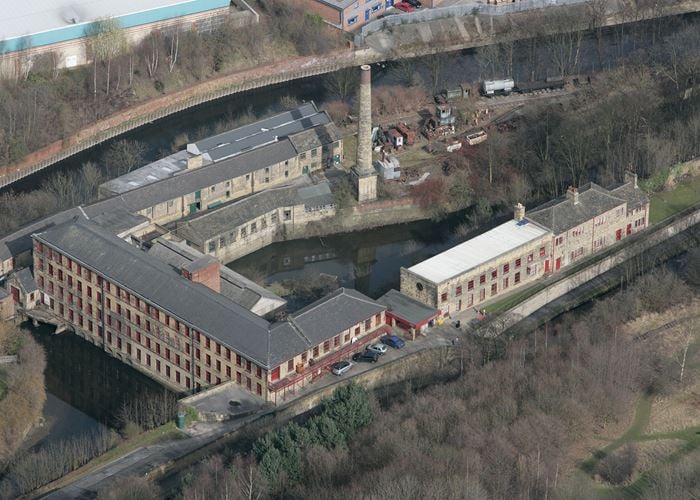
Leeds’ industrial history dates back to the latter half of the 18th century, when the city saw the rise of its first textile mills. The advent of mechanised textile production triggered a boom in large-scale manufacturing — particularly in wool and cotton. By the mid-19th century, Leeds had become one of the UK’s major industrial centres, with over 30,000 people employed in the textile sector alone.
A key player in the city’s industrial scene was Armley Mills. Originally built to process cloth and grain, the mill was operating by 1707 with two waterwheels and four fulling stocks — a sign of its early involvement in textile production. Later sold to new owners, Armley Mills expanded dramatically, becoming the largest woollen mill in the world, with 18 fulling stocks and 50 power looms. Its location beside the Leeds and Liverpool Canal allowed for the efficient transport of raw materials and finished goods, while the nearby River Aire provided hydropower through a system of waterwheels. Over time, the mill evolved into a large-scale woollen manufacturing facility. Today, it lives on as the Leeds Industrial Museum, preserving the city’s industrial legacy.
Marshalls and Joseph’s Mills: Wool Powerhouses of Leeds
The textile firms Marshalls and Joseph’s Mills also played vital roles in Leeds’ economic rise. Marshalls emerged in response to growing demand for woollen cloth, much of which was exported globally. The company gained a reputation for producing high-quality woollen goods popular across Britain and beyond. Like many mills of the era, Marshalls embraced the use of mechanisation and steam engines to greatly increase its output.
Joseph’s Mills was another key name in Leeds’ textile industry. It was renowned for its capabilities in spinning and weaving, with its factories serving major markets in North America and Europe. The company helped cement Leeds’ reputation as a global centre of the wool trade.
By the early 20th century, Leeds was home to more than 100 large-scale factories and industrial enterprises, exporting textiles to some of the most distant parts of the world. At the height of its industrial boom in the 1920s, Leeds employed around 90,000 workers in manufacturing.
The city’s industrial prominence began to decline gradually after the Second World War, as many mills either closed or adapted to new industries in response to global shifts in technology and economic demand.
In conclusion, the historic factories of Leeds are more than relics of a bygone era — they are the foundations on which today’s city was built. Without the industrial revolution, it is hard to say whether Leeds would have developed into one of the most dynamic and economically robust cities in the country.
We hope you found this article insightful and learned something new about the rich industrial heritage of our beloved city.